Showing posts with label Common Core. Show all posts

Sunday, 14 April 2013

Listening's Down So Listen Up!

There's a huge problem in the world today.  No, it's not the sequestration, gun control, or equal rights marriage, but it's something that has to do with each one of these issues and more.  The problem is that people aren't listening like they used to.


Don't just take my word for it.  This past week, President Obama noted this problem himself when referring to the gun control debate.  "Part of the reason it's so hard to get this done is because both sides of the debate don't listen to each other," he stated.  "Sometimes we're so divided...the two sides talk past each other."

This problem isn't solely confined within the halls of Congress. Further evidence can be found right in your own pocket.  With the advent of smartphones and iPads, the practice of plugging in and tuning out has skyrocketed.  Just look around the next time you're walking downtown.  You'll probably see a number of those ubiquitous white earbuds.
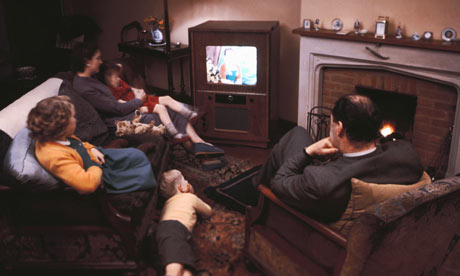

Some could argue that this leads to better listening, but it doesn't.  Here's why.  Back when I was a kid, listening was a communal activity.  Whether it was the news on television or the record on the turntable, we often listened with others and reacted together in real time.  Now, when we're plugged in, we shut others out and rely solely on our own interpretation of what we hear.  

Not only that, with more choices right at our fingertips, what we listen to is tailor made.  Sure, we have greater access to listen to a variety of things more than ever before, and this is a good thing.  However, with so much choice and a competitive 24 hour news cycle, news outlets are pressured to sensationalize or even editorialize their content.  As a result, we may gravitate only to outlets that support our views thereby limiting our exposure to differing opinions.  

And because of Youtube, iTunes, on demand TV and more, we can listen to whatever we want whenever we want.  If it doesn't interest us, we can stop it and move on to something else.  No longer do we have to weigh whether it's worth getting up to change the channel.  With one swipe of a finger, we easily move on to something that may interest us more.

None of this bodes well for our students and their ability to develop effective listen skills.  It's no wonder that when I give a set of instructions in class, a student invariably raises his hand and asks a question that I just explained.  With all of these societal factors at play, who can blame him?

Instead of pulling out all of our hair, maybe we should remind ourselves why this is the case and think of how we can help our students develop active listening skills.

For starters, check out this Ted talk about listening by sound expert, Julian Treasure who reiterates these points and offers valuable listening exercises:


With Treasure's challenge to teach listening in mind, here are some possibilities to consider in our classrooms:


  • Focus on listening in Homebase:  Why not try out some of Treasure's exercises in homebase.  Here they are once again:
    • Listen for Silence:
      • Take three minutes to sit in silence as a group to "recalibrate our ears."
    • The Mixer:
      • Notice all of the "channels of sound" in a given setting.
    • Savoring Sounds:
      • Listen to mundane sounds and develop an appreciation for them.  Let them become your "hidden choir."
    • Listening Positions:
      • Become aware of your listening position or "filters" by determining how you listen differently based on what you are listening to.
    • RASA:  
      • Practice this active listening process:  Receive, Appreciate, Summarize, and Ask.
Common Core Speaking and Listening Standards for Grade 8
  • Teach a listening mini-lesson:  By referring to the Common Core standards for speaking and listening, we can develop meaningful lessons for our classrooms.  One example that some teachers use is teaching students to piggybacking (spelled piggybacqing) for discussions:
    • Beg to differ
    • Agree
    • Connect
    • Question
  • Make time for debate:  Good debaters know how to listen to all sides of an argument before debating.  Not only that, while debating, they need to listen carefully to what their opponents say so they can respond with a rebuttal.  Lastly, debating also reinforces other essential skills such as making claims, citing from a source, and speaking clearly and confidently.  Possible debate topics include:
    • Is a particular character ___________ or ___________? (ex. strong or weak)
    • What's the most important theme of a book?
    • Is the book or movie better?
  • Teach a mini-lesson about perspective:  Listening enables us to hear different perspectives.  By teaching a mini-lesson about perspective and giving time to explore a variety of them, this thinking will help students understand the importance of listening and be able to take on other points of view.  Ideas may include:
    • Writing from a character's point of view.
    • Analyzing why authors write 1st person or 3rd person.
    • Exploring the role of secondary characters.
    • Comparing the voices that are heard in a text with the voices that are not heard.
  • Read sources from differing points of view:  This is perfect for informational text reading.  Currently, Grade 6 students are reading through a series of sources on a given issue (ex. teaching cursive, banning dodgeball, using cell phones at school, etc.).  An added bonus is that some of these sources are digital, so students have to listen carefully to hear both sides.  As they are learning to analyze the sources (who wrote it and why) and determine the author's point of view.  At the same time, they're learning to let go of their own preconceived notions about the issue until they've read through all of the sources.
In the end, teaching listening may be one way we can help solve a huge problem in today's world.  And while I'm not naive enough to believe that listening will automatically build consensus, I do believe that it will lead people to talk with (instead of past) one another.  It will also help develop a society full of people who understand and appreciate their differences as well as the similarities.


Images from:

  • http://freelanceswitch.com/
  • http://content.usatoday.com/
  • http://guardian.co.uk/
  • http://edudemic.com/

Sunday, 11 November 2012

Without Any Hiccups At All

Imagine my surprise the other night at the dinner table when Isabelle told me she wrote a Personal Essay in class.  "Really?" I asked, looking up from my plate.  Of course as a parent I was interested in what my 4th grader was working on as a writer, but as a teacher, I was also keen to hear what was happening in the elementary grades, especially since our grade level is currently working through the same unit.


"Yeah," Isabelle went on to say.  "My essay is on hiccups.  You see, I got the hiccups in class, and I was so annoyed, I just had to write about it."  I smiled and nodded my head.  I knew exactly what she meant. "So I used 'boxes and bullets' to organize my thoughts, and I came up with three reasons why hiccups are so annoying."  I looked back down at my plate.  That's the exact same lesson I taught to my 6th graders just days before.

As teachers, our initial reaction to situations like this is "How could they do that?" or "Don't they know that's our lesson?"  I admit it, I felt those reactions bubble up immediately.  It's as if we teachers stake claims to lessons and ideas, and we don't want anyone else to encroach upon our territory.  In this case, how could 4th grade be doing our business of boxes and bullets?


Before we all go berserk, I've come to realize that a "problem" like this is actually a good thing.  Here's why.  Isn't it good that readers and writers are being taught effective skills and frameworks as soon as they begin studying the genre?  In fact, their eventual prior learning  will allow us to push them even further when they do get to our classrooms.  

Not only that, just because a student learns some of these skills and frameworks, by no means is she an expert at applying them fully.  You could argue that continued application of  the skill will ensure mastery over a longer period of time.  That's one of the major benefits of a cyclical curriculum anyways.  And as far as studying a genre again and again is concerned, no way does a writer become an expert just by writing a piece in that genre once, twice or even five times.  Authors spend their lives writing through a single genre, and they still find new twists and turns along the way. 

Another consideration is that with our transient student population, invariably there will be new students who are unfamiliar with workshop and some of these skills and frameworks.  And for all students, new to SAS or not, they continue to use the genres and skills that are dear to them to make meaning of new experiences as they grow older.

Having said all that, it's clear the days of closing our doors and doing our own thing in our classrooms are gone.  And they should be.  According to the 2009 MetLife Survey of the American Teacher, one reason why US schools rate lower than their developed nation counterparts is because US teachers spend 93% of their time working in isolation. A related study done by McKinsey and Co. in 2010 found that one common characteristic of schools demonstrating continual improvement in student learning is teachers share and work on their practice together by becoming "learners of their own teaching" (see "Building Capacity to Transform Literacy Learning," NCLE).  In addition, Lucy Calkins contends that you can rate the quality of a school by the amount of meaningful conversations that teachers have about moving their students forward.  


Simply put, we must seek every opportunity to step out of our classrooms and grade levels to engage in meaningful conversations with our colleagues.  Now that our school has worked to implement the Reading and Writing Workshops, the initial years of every teacher trying out the generating ideas lessons or basic craft lessons of a genre have passed.  Our readers and writers are coming up with more skills and experience.  It's as if we were all learning to ride bikes at the same time, and now that the training wheels are coming off, those lessons just won't cut it anymore.  It's time to work on jumps, wheelies, and hard core racing.  In other words, maybe 4th grade should cover boxes and bullets whereas 6th grade can focus on ordering the bullets for effect.

So how do we do this?  

  • Instead of thinking how can I teach "my students" in "my classroom,"  think how can we teach "our students" in "our school."
  • Be active members in PLCs by asking questions not only of the units in our grade levels, but of what is happening in the surrounding grade levels.
  • When planning units, use the Common Core as a resource for writing teaching points.  With its more precise articulation at each grade level, we can ensure a steady progression of rigor as our readers and writers pass up through the grades.
  • Use pre-unit assessments to gauge where the students are in terms of the work each genre requires.  Then modify and adjust teaching points accordingly
  • In mini-lessons, continually call on students to apply previously learned skills and frameworks to their current work.
  • Continue to read and write so that we can better inform our teaching.  By actually doing the work of readers and writers, we can teach from true experience and develop teaching points that come from the heart.
And finally,
  • Don't leave it up to a 4th grader to find out what is happening in other classrooms and grade levels.

If we take on just some of these ideas collectively, we'll continue to grow as a school and provide an exemplary program in RLA without any hiccups at all.


Images from:


Sunday, 7 October 2012

Making Claims and Providing Evidence

Something amazing happened this week.  Unfortunately, it wasn't a peace deal in Syria, or an end to the global economic down turn.  No, what happened was that Big Bird may have finally been put on notice.

If you weren't one of the 70 million plus viewers or a contributor to the 10.3 million tweets, you may have missed the US Presidential Debate on Wednesday night.  Regardless of political affiliations, many analysts, pundits, and viewers alike attribute Romney with winning the debate.  He "emerged from the fog" as David Brooks wrote.   And while some reported that the debate lacked a bit of luster, I was blown away, not necessarily at what the candidates said, but on how people reacted.


At one point during the debate, Romney said, "I'm going to stop the subsidy to PBS.  I'm going to stop other things.  I like PBS.  I love Big Bird.  I actually like you, too (Jim Lehrer).  But I'm not going to--I'm not going to keep on spending money on things to borrow money from China to pay for."

Instantly a flood of reactions hit the twittersphere peaking at 140,000 tweets per minute.  The next day, the CEO of PBS was interviewed on Nightly News, and since then even young viewers voiced their opinions.  Not all reactions were negative though.  Ari Fleischer tweeted, "Big Bird needs to ask Dora the Explorer how she manages 2live without tax payer money.  Try it Big Bird.  You'll be just fine."  Unfortunately for Romney, he just can't get his claims to come out right.  Remember the 47%?  And this time, his claim on stopping spending got lost in a cloud of yellow feathers.         
                
My point is, we're reacting to claims more than ever before. As soundbite scavengers, we look for simple take-aways that make lasting impressions.  For better or worse, political campaigns are built on this, and so too is our 24 hour news cycle society.  Claims are captured, replayed, and double-checked more than ever before.  It seems like the term "fact check" appears in the news daily now, and there's even an organization dedicated to it, factcheck.org.


It's no wonder then that the Common Core emphasizes the teaching of making strong claims and supporting them with valid evidence so much. 

The words "claim" and "evidence" only appear a couple of times in the Common Core, but  if you look across the standards in reading and writing, it's everywhere really.  In the following charts, I pulled the standards for Grade 6 and turned them into claims that I want my students to be able to make or do.  For each claim, there is accompanying evidence that students need show or use to support their claims.


I may have gone claim crazy, but I used this framework when I had my students set goals for reading and writing.  I told them that a goal is just a claim that you want to be able to make in the future.  The steps to achieve the goal, I told them, will become the evidence you accumulate along the way to prove that you achieved the goal.

In today's world, we can't avoid making claims nor should we.  Being part of a democratic society depends on it too much.  What we should do is teach to it more directly.  Students need to state strong claims and provide supporting evidence often.  They need to notice when others state claims and ask whether the evidence is valid or not.  In doing so, they'll become more effective communicators and critical members of society.  That's my claim, now prove me wrong.


Images from:  
http://www.huffingtonpost.com/2012/10/04/mitt-romney-big-bird_n_1940400.html?utm_hp_ref=mostpopular
http://factcheck.org/